
Best Time to Aerate Your Lawn in Maryland: A Complete Timing Guide
Aeration is one of the most impactful services you can give your lawn — but only if the timing is right. Aerate at the right time and you relieve compaction, improve drainage, and create the conditions for thicker, healthier grass. Aerate at the wrong time, and you stress the lawn during a period when it cannot recover.
Knowing the best time to aerate your lawn in Maryland depends primarily on your grass type. Most Maryland lawns are planted with cool-season grasses, but the state spans enough climate variation that regional timing matters too. This guide covers ideal aeration windows by grass type, the signs that tell you your lawn needs aeration, and what to expect from a professional aeration service.
What Is Lawn Aeration and Why Does It Matter?
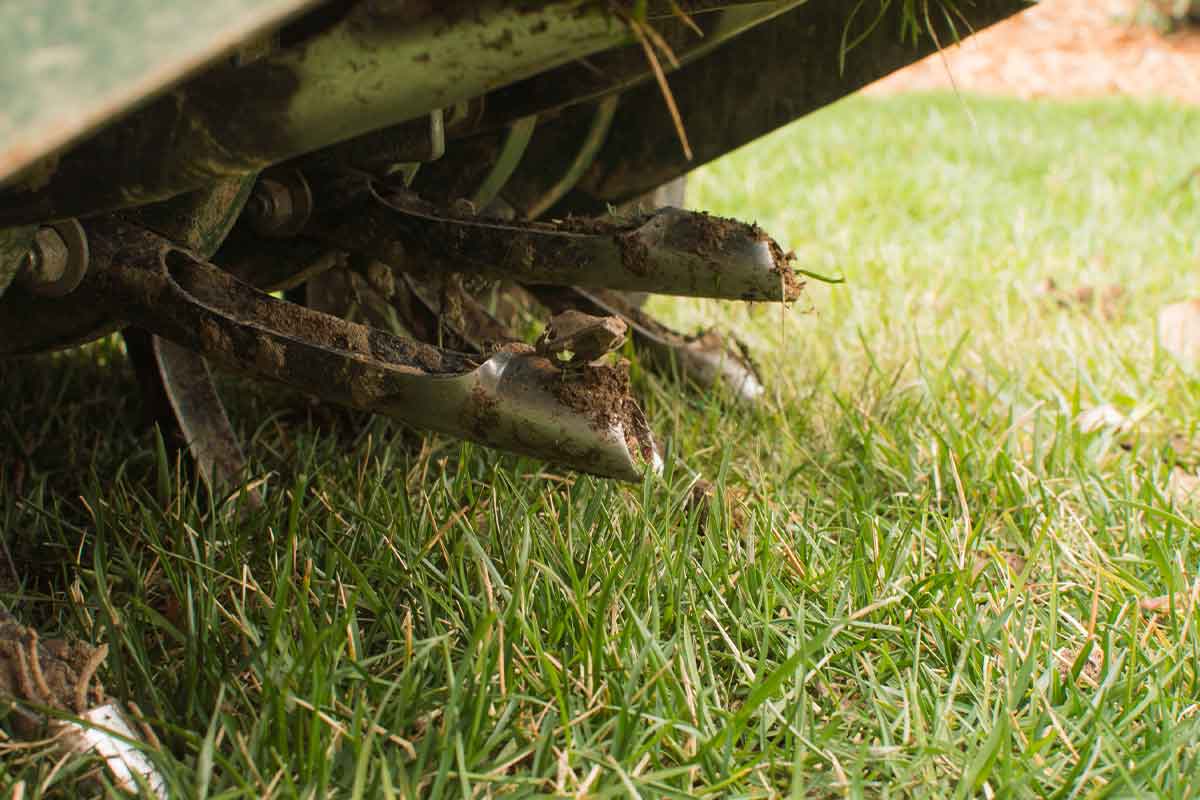
Core aeration is the process of mechanically removing small plugs of soil from the lawn — typically two to three inches deep and about half an inch in diameter. A core aerator pulls these plugs at intervals across the entire lawn surface, creating thousands of small holes that serve three critical functions.
First, aeration relieves soil compaction. Foot traffic, mowing, rain, and natural soil settling compress the soil structure over time, squeezing out the air spaces that roots need to grow. Compacted soil restricts root depth, reduces water infiltration, and limits oxygen and nutrient movement through the root zone.
Second, aeration improves water and nutrient penetration. Compacted soil causes water to pool on the surface or run off rather than soaking into the root zone. After aeration, water and fertilizer move directly through the plug holes into the soil profile, reaching roots more efficiently.
Third, aeration reduces thatch buildup. By improving oxygen flow to the soil, aeration stimulates the microbial activity that decomposes thatch naturally. The soil cores left on the surface also introduce thatch-decomposing microbes directly into the thatch layer.
Best Time to Aerate Cool-Season Lawns in Maryland
The best time to aerate a lawn in Maryland is early fall — specifically when soil temperatures are between 55°F and 65°F and daytime air temperatures consistently fall between 60°F and 75°F. For most of Maryland, this window falls between late August and mid-October depending on your region.
Maryland cool-season grasses — primarily tall fescue, Kentucky bluegrass, and perennial ryegrass — enter their second peak growth period in fall. Roots are actively extending deeper as temperatures cool, and the grass is recovering from summer stress. Aerating during this active growth phase means the lawn fills in aeration holes within two to three weeks while simultaneously benefiting from improved soil conditions.
Maryland aeration timing by region:
- Southern Maryland — Late August through mid-September
- Central Maryland (Baltimore and DC suburbs) — Early September through mid-October
- Western Maryland — Late August through late September
- Eastern Shore — Late August through late September
Soil temperature is a more reliable trigger than calendar date. The University of Maryland Extension tracks real-time soil temperature data and recommends monitoring your specific county rather than relying on a fixed date. You can access current Maryland soil temperature readings through the University of Maryland Extension at extension.umd.edu.
Spring aeration is an acceptable alternative if you missed the fall window. Target late March through mid-May, after the soil has thawed and dried enough to core cleanly. Spring aeration carries some risk of creating entry points for crabgrass, so pairing it with a pre-emergent application is recommended — though this creates a conflict if you also plan to overseed, since pre-emergent prevents desirable seed from germinating as well.
Best Time to Aerate Warm-Season Lawns in Maryland
Warm-season grasses — including Zoysia and Bermuda — are found in some Maryland lawns, particularly in Southern Maryland and the Eastern Shore, where temperatures are warmer. These grasses follow the opposite growth cycle from cool-season types and require a different aeration schedule.
The best time to aerate warm-season lawns in Maryland is late spring through early summer, typically May through June. This aligns aeration with the peak growth period, allowing the lawn to fill in aeration holes within one to two weeks. The grass should be actively growing and green, and soil temperatures should be consistently above 65°F.
Never aerate warm-season grass during dormancy (November through March). The grass cannot recover during dormancy, and open holes can invite winter weeds and expose the root system to cold damage.
Signs Your Maryland Lawn Needs Aeration
Some lawns benefit from aeration annually, while others can go two to three years between treatments. These signs indicate your lawn is ready for aeration sooner rather than later.
The screwdriver test: Push a standard screwdriver into moist soil. If it meets significant resistance in the top three inches, your soil is compacted. In healthy, uncompacted soil, a screwdriver slides in easily to a depth of four to six inches.
Water pooling or runoff: If water sits on the surface after rain or irrigation rather than soaking in, compaction is restricting infiltration. You may also notice water running off sloped areas more quickly than it used to.
Thin grass despite regular care: If you are fertilizing, watering, and mowing correctly but the lawn remains thin and lackluster, compacted soil may be restricting root growth. Shallow roots limit the plant’s access to water and nutrients, producing weak top growth.
Heavy clay soil: Much of Maryland — particularly the piedmont region spanning Baltimore, Howard, and Montgomery Counties — is characterized by dense red and yellow clay soil. Clay compacts more severely and more quickly than loam or sandy soils. If your lawn sits on clay, annual aeration is recommended regardless of visible symptoms.
High-traffic areas: Lawns with regular foot traffic from kids, pets, or outdoor entertaining compact faster than low-traffic lawns. Worn paths, thin strips along walkways, and hard-packed play areas all benefit from annual aeration.
Thatch buildup: Push your finger through the grass canopy and feel for a spongy brown layer between the green blades and the soil surface. If that layer is thicker than half an inch, thatch is accumulating faster than it breaks down and aeration will help restore the balance.
Should You Aerate Before or After Overseeding?
Aerating immediately before overseeding is the most effective approach for Maryland cool-season lawns. The aeration holes give seed direct soil contact at the ideal depth, producing germination rates significantly higher than surface seeding alone.
For Maryland lawns, the ideal sequence is aeration followed immediately by overseeding, then fertilization, in a single fall visit. This combination — timed to the early fall soil temperature window — delivers the most dramatic improvement in lawn density of any service available.
The University of Maryland Extension recommends fall as the primary window for both aeration and overseeding of cool-season grasses in Maryland.
How Often Should You Aerate Your Lawn in Maryland?
Most Maryland lawns benefit from annual aeration, particularly those on clay soil, those with heavy foot traffic, or those showing visible signs of compaction. The dense clay soils common across central and western Maryland compact more readily than sandier soils and hold compaction longer, making annual treatment the standard recommendation for most properties in the region.
Lawns on sandier soils — common on the Eastern Shore — can typically go two to three years between treatments, provided there are no visible compaction symptoms.
When in doubt, the screwdriver test after a rain or irrigation is the most practical way to assess your lawn’s current compaction level before scheduling service.
Professional Lawn Aeration Services in Maryland
Timing aeration correctly requires knowing your grass type, soil composition, and local soil temperature trends — variables that differ across Maryland’s regions. A professional lawn care provider eliminates the guesswork and ensures aeration is performed at the optimal point in your lawn’s growth cycle with commercial-grade equipment that pulls deeper plugs than consumer rental machines.
MRW Lawns provides professional core aeration services across Maryland, with treatments timed to local soil conditions and coordinated with overseeding and fertilization for maximum results.
Contact MRW Lawns today to schedule your fall aeration and give your lawn the deep-root relief it needs.
Frequently Asked Questions
When is the best time to aerate your lawn in Maryland?
The best time to aerate a cool-season lawn in Maryland is early fall, typically between late August and mid-October depending on your region. This window aligns with the second peak growth period for tall fescue and other cool-season grasses common across Southern Maryland, Charles County, Calvert County, and Prince George’s County. Aerating during active fall growth allows the lawn to fill in aeration holes quickly while immediately benefiting from improved soil conditions.
How often should I aerate my lawn in Maryland?
Most Maryland lawns benefit from annual aeration, particularly those on the heavy clay soils common across Southern Maryland and the piedmont region. Clay soil compacts more readily than sandy or loamy soils and holds compaction longer, making yearly treatment the standard recommendation for most properties in MRW Lawns’ service area. Lawns with lighter soil and low foot traffic can typically go two to three years between treatments.
Should I aerate before or after overseeding?
Aerate first, then overseed immediately after. The aeration holes provide direct seed-to-soil contact at the ideal depth, significantly improving germination rates compared to surface seeding alone. For Southern Maryland lawns, the combination of fall aeration followed by overseeding and fertilization in a single visit is the most effective way to thicken a thin or patchy lawn before winter.
Should I aerate before or after fertilizing?
Aerate before fertilizing. Once the aeration holes are open, fertilizer can move directly into the soil profile and reach the root zone more efficiently than it would on a compacted surface. For MRW Lawns customers on a lawn care program, fall aeration and fertilization are coordinated as part of the same seasonal service for exactly this reason.
Can I aerate in spring instead of fall in Maryland?
Spring aeration is a viable option if the fall window was missed, targeting late March through mid-May once the soil has thawed and dried enough to core cleanly. However, fall aeration is strongly preferred for Maryland’s cool-season lawns because it aligns with the strongest growth period and allows combination with overseeding without the weed seed conflict that spring aeration creates. Spring aeration should be paired with pre-emergent weed control, which rules out overseeding at the same time.
Does MRW Lawns offer aeration and overseeding services in Southern Maryland?
Yes — MRW Lawns provides professional aeration and seeding services across Southern Maryland and Northern Virginia, including Charles County, Calvert County, Prince George’s County, Saint Mary’s County, Queen Anne’s County, and surrounding areas. MRW has been serving Maryland lawns since 1988 and uses only slow-release nitrogen products and high-quality materials designed to improve turf health without impacting the surrounding environment. Contact MRW Lawns to schedule your fall aeration and overseeding service before the seasonal window fills up.